The Vanishing: How Institutional Silence Becomes Conspiracy
When institutions won't communicate, people fill the silence with theories. 12 scientists, classified work, no answers. Here's how silence breeds conspiracy.
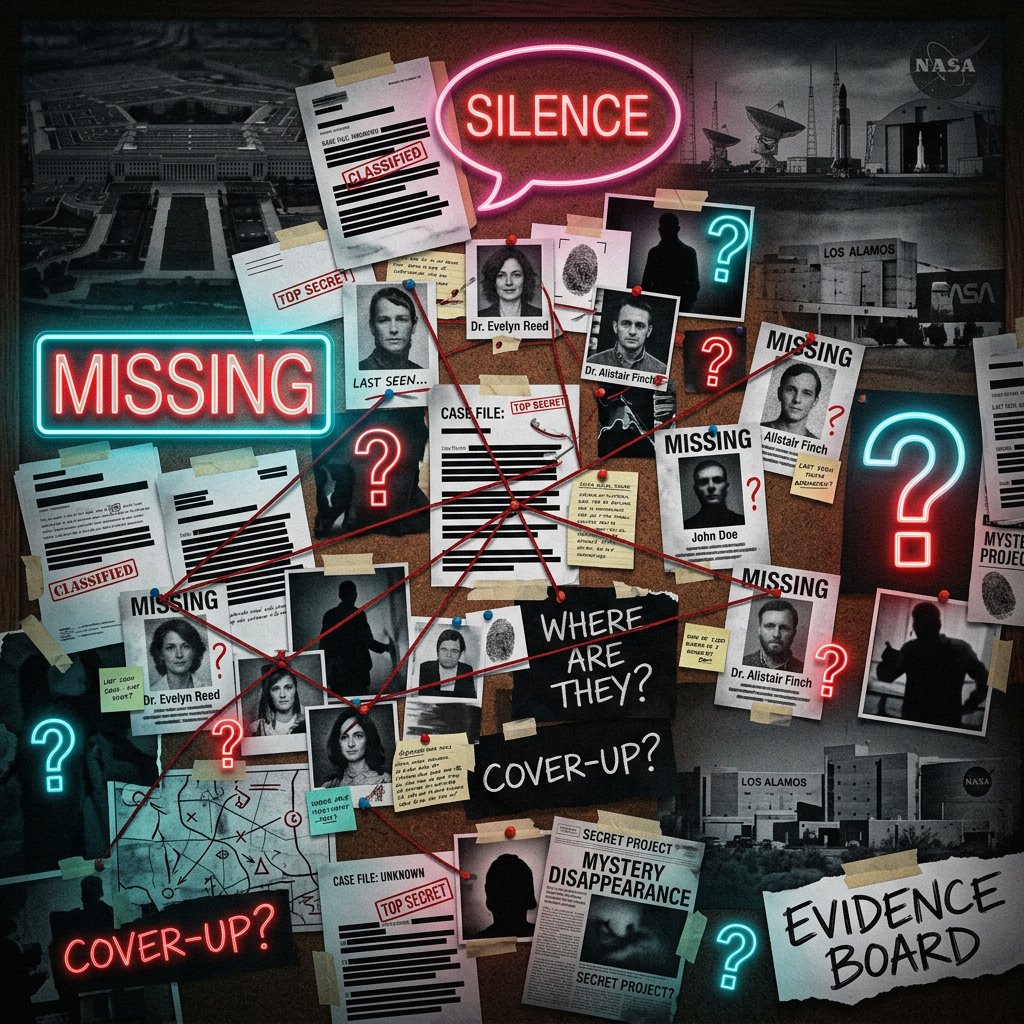
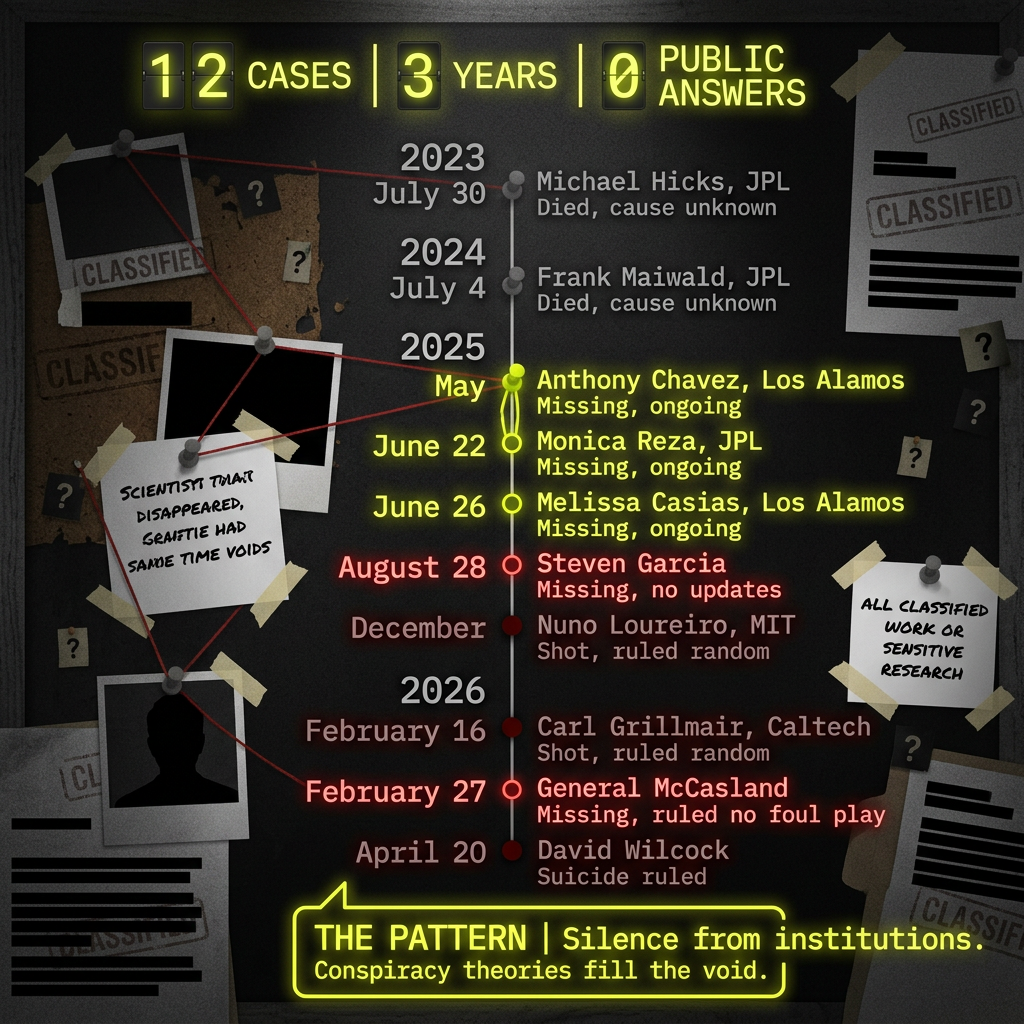
Between July 2023 and April 2026, at least 12 scientists and researchers connected to U.S. nuclear weapons programs, space technology, and classified aerospace research either died or disappeared. Some were found. Some are still missing. Official explanations range from "natural causes" (cause never disclosed) to "ruled out foul play" (investigation closed, no public briefing) to "still under investigation" (no updates, no timeline).
The House Committee on Oversight and Government Reform launched an investigation. The FBI got involved. Congress held briefings. And yet: almost no public information. No transparency. No clear answers.
Into that vacuum, conspiracy theories rushed. UFO connections. Suppressed research. Witness elimination. Dark money. Foreign agents.
Here's what you need to know: the conspiracy theories aren't crazy. They're predictable. They're what happens when institutions go silent.
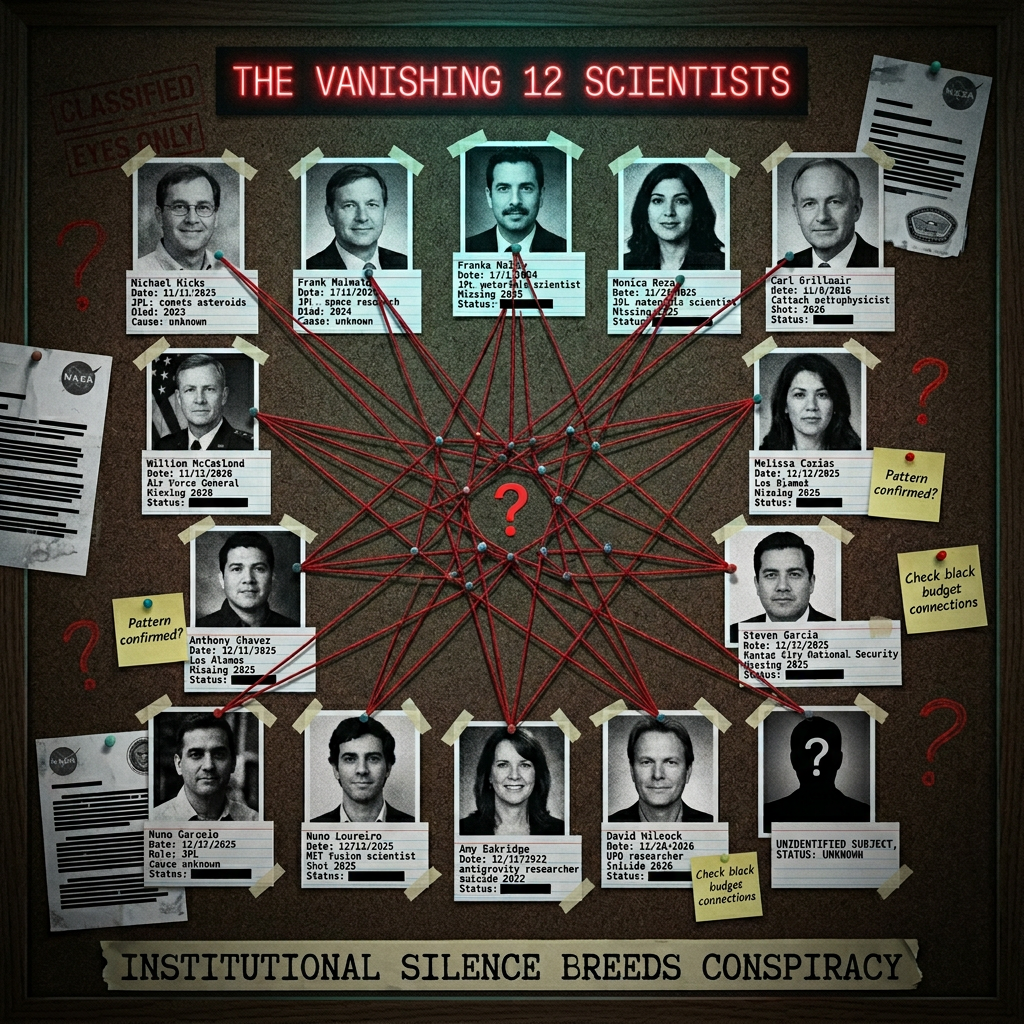
The Files
The Scientists
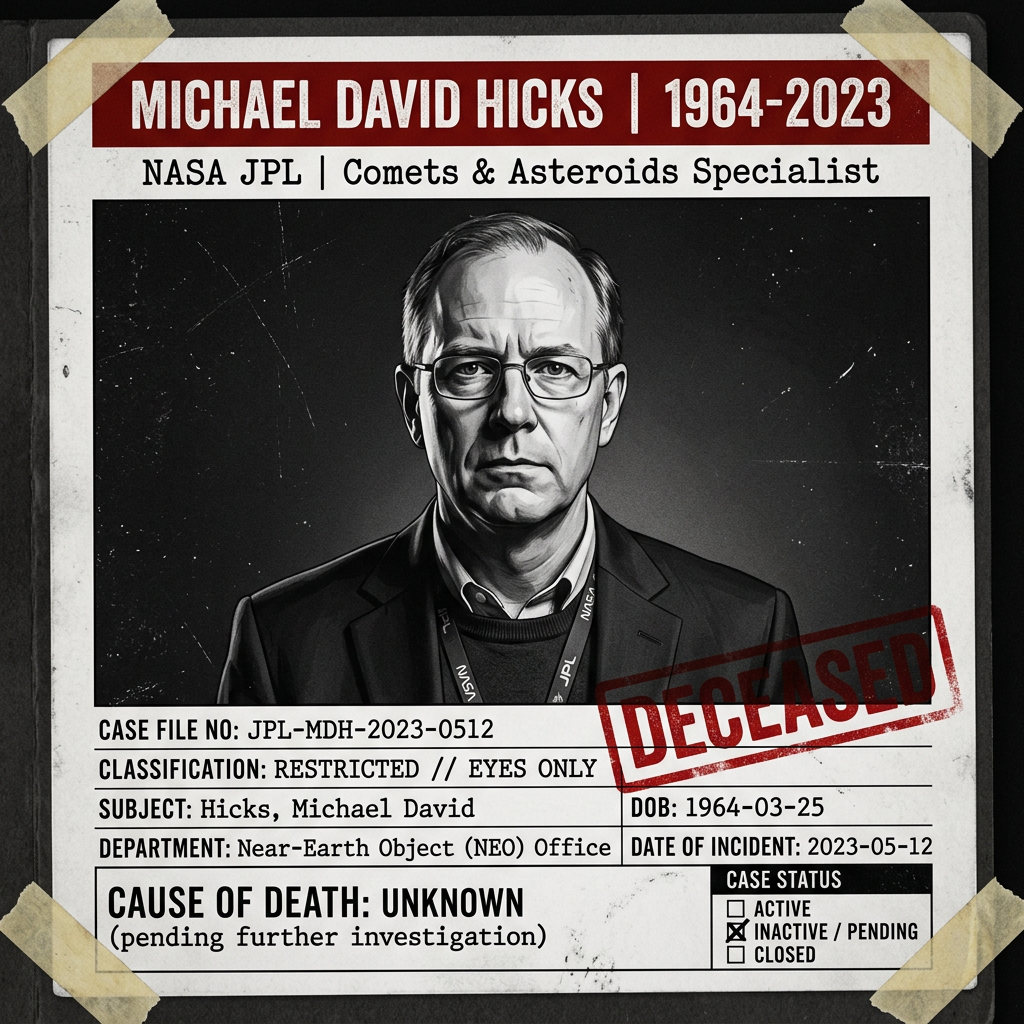
Michael David Hicks — NASA Jet Propulsion Laboratory
- Died: July 30, 2023
- Age: 59
- Specialty: Comets and asteroids
- Cause of death: Never publicly disclosed
- Connection: Worked at JPL for nearly 25 years; access to sensitive aerospace data
- Official status: Family says he had "known medical issues"; no federal agencies contacted them about the disappearances/deaths cluster
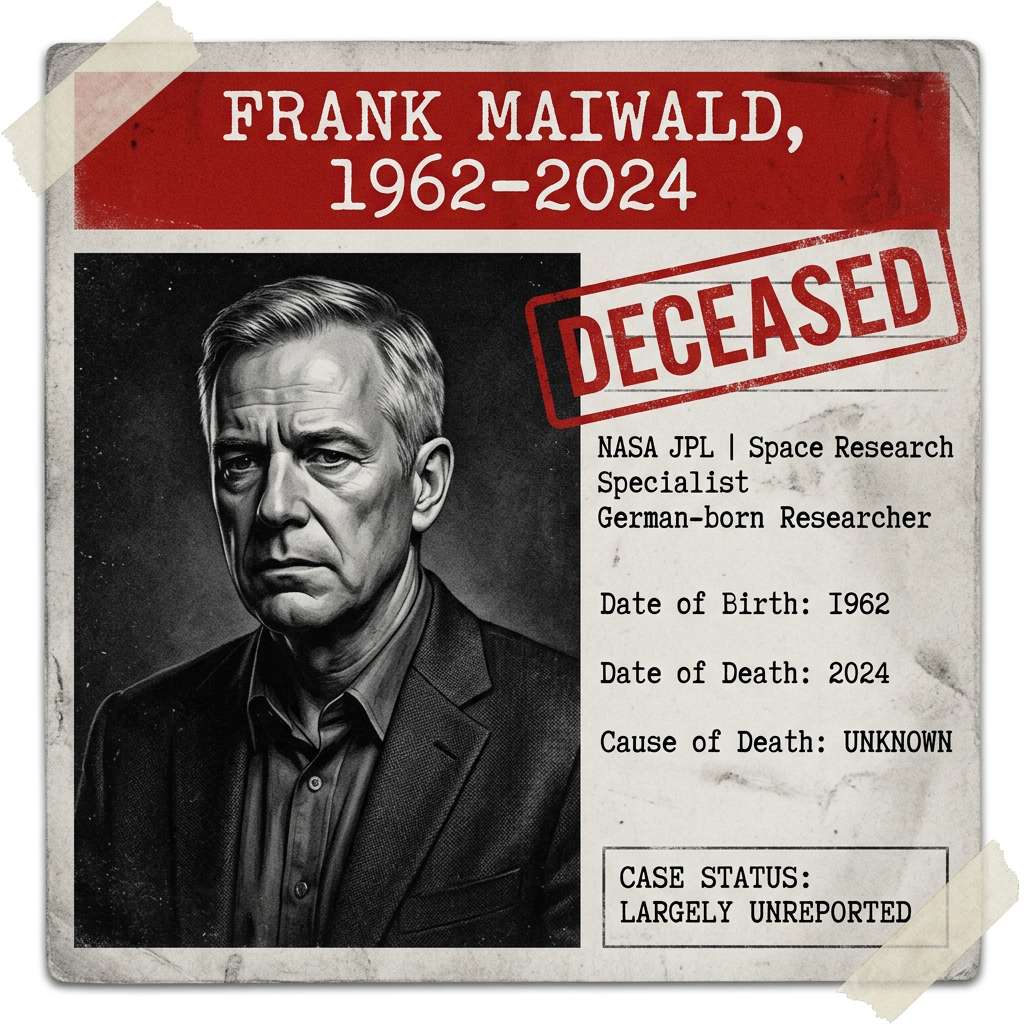
Frank Maiwald — NASA Jet Propulsion Laboratory
- Died: July 4, 2024
- Age: 61
- Specialty: Space research, German-born researcher
- Cause of death: Never publicly disclosed
- Connection: JPL researcher; access to advanced materials and propulsion research
- Official status: Death largely unreported; no public investigation
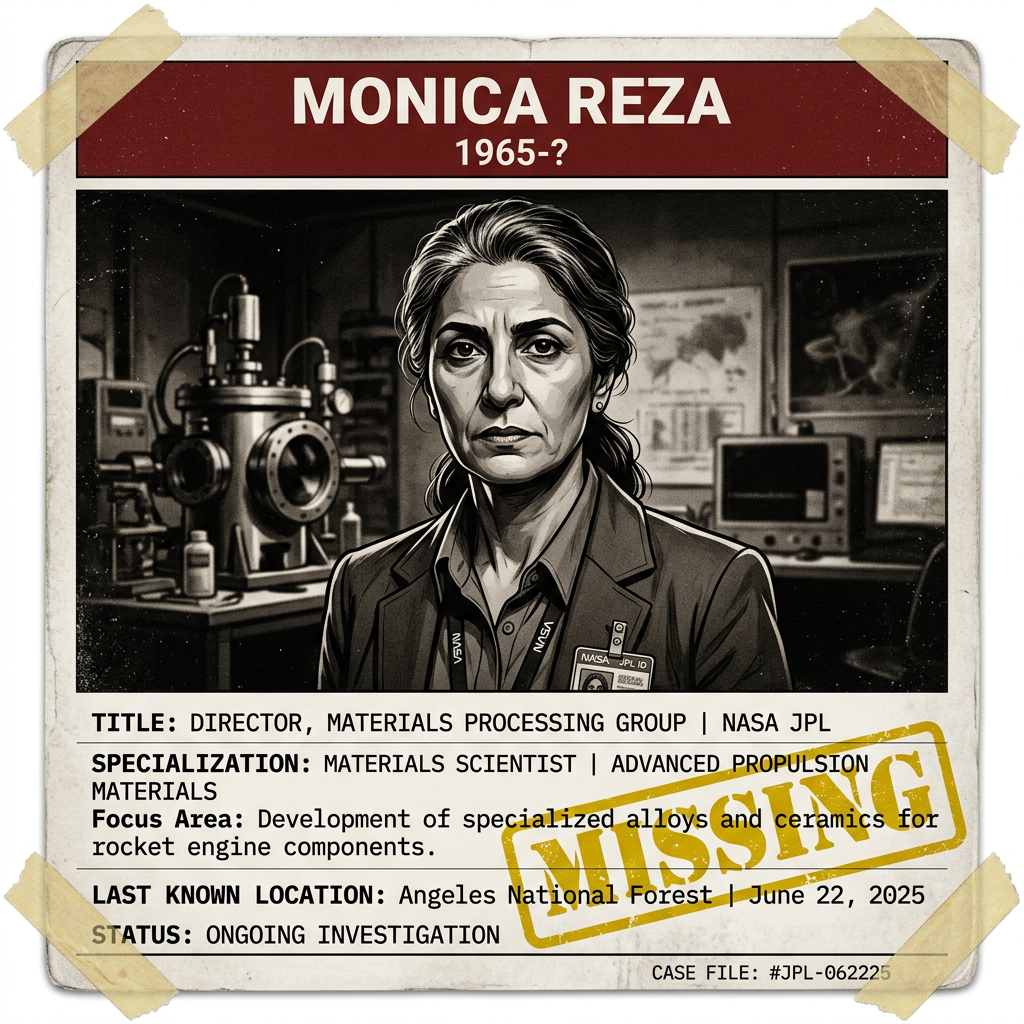
Monica Reza — NASA Jet Propulsion Laboratory
- Disappeared: June 22, 2025
- Age: 60
- Specialty: Materials scientist; director of Materials Processing Group; co-invented nickel-based superalloy used in rocket engines
- Last known: Went hiking in Angeles National Forest; never returned
- Connection: Work linked to advanced materials for reusable space vehicles and weapons
- Official status: Still missing; investigation ongoing; no public updates
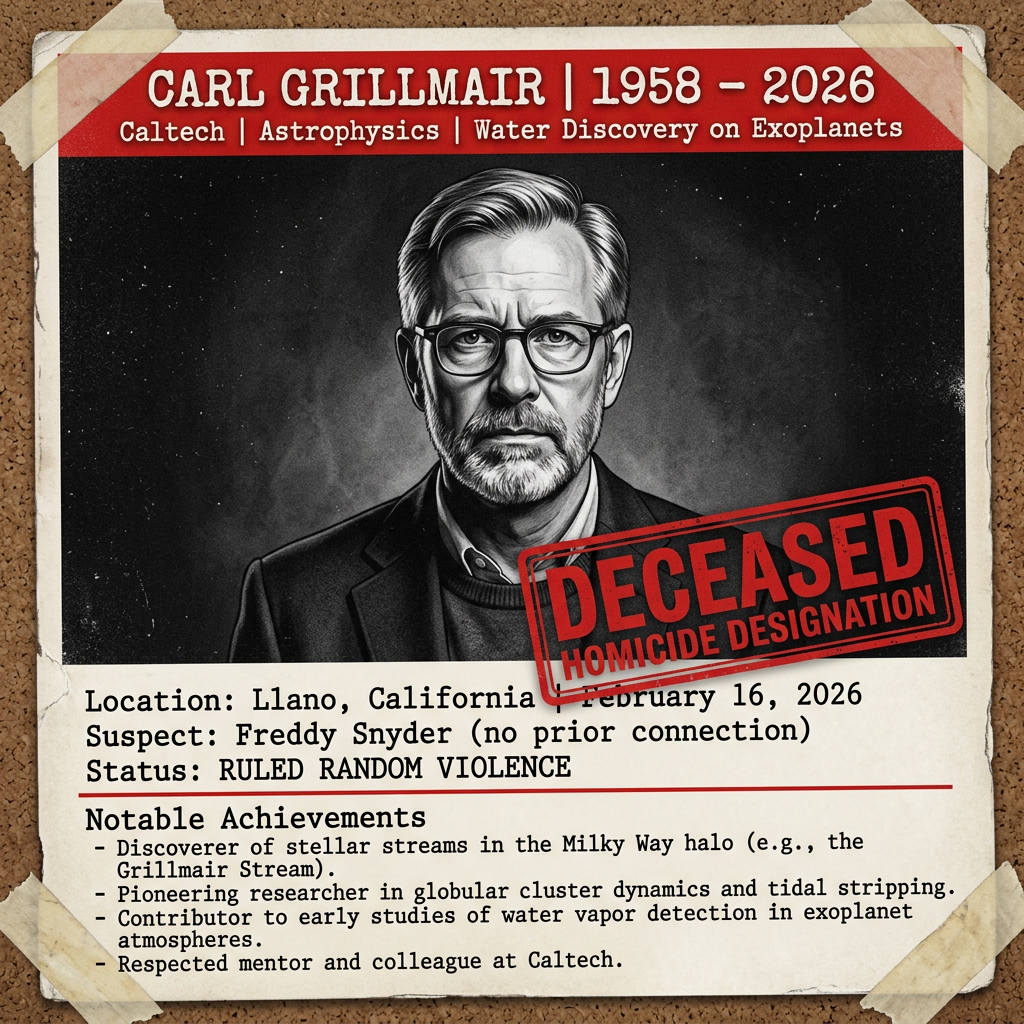
Carl Grillmair — Caltech Infrared Processing and Analysis Center
- Died: February 16, 2026
- Age: 67
- Specialty: Astrophysicist; discovered water on distant planets
- Cause of death: Shot on his doorstep in Llano, California
- Suspect: Freddy Snyder, 29, arrested; reported not to have known victim
- Official status: Murder ruled not connected to his work; case treated as random violence
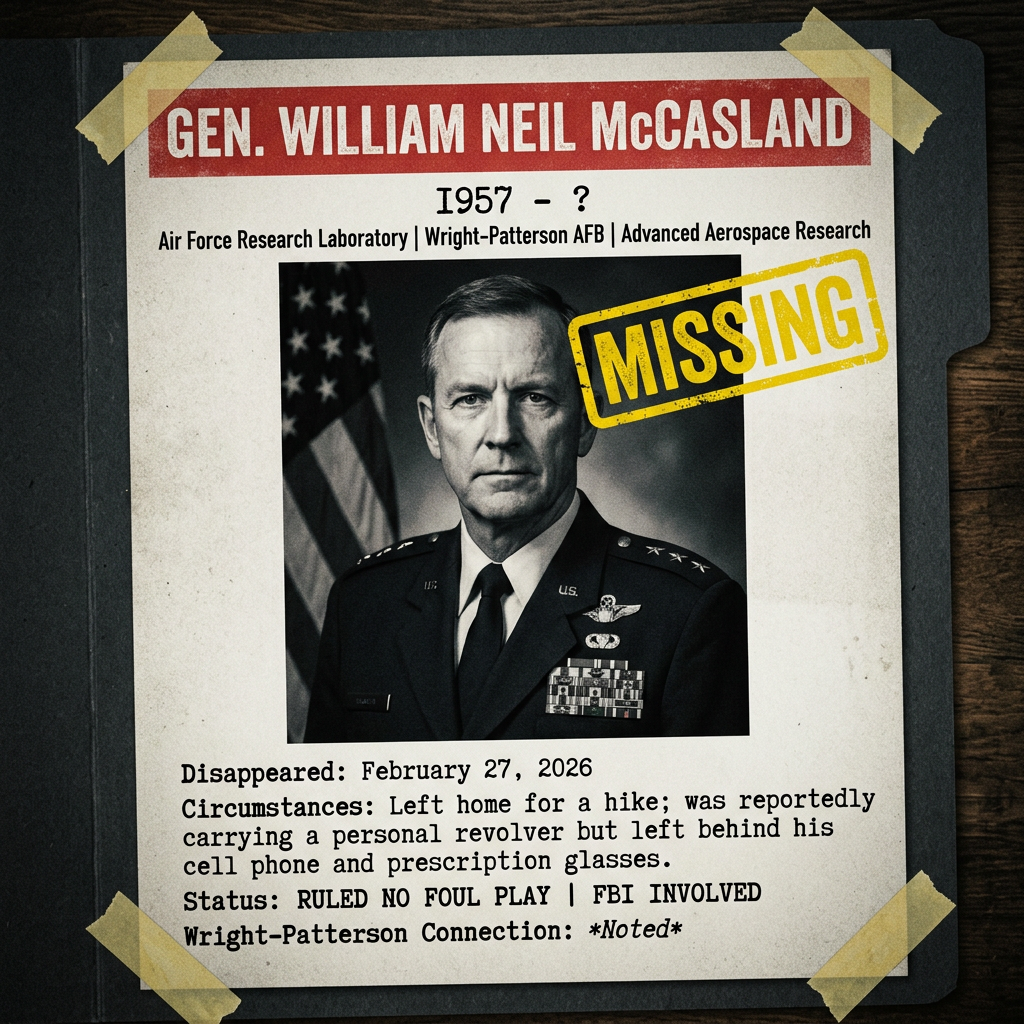
Retired Air Force General William Neil McCasland — Wright-Patterson Air Force Base
- Disappeared: February 27, 2026
- Age: 68
- Specialty: Former commander of Air Force Research Laboratory; access to advanced aerospace and weapons research
- Last known: Left home for a hike with .38-caliber revolver, hiking boots, wallet; left behind phone, glasses, wearable devices
- Connection: Wright-Patterson AFB long rumored to house classified aerospace and alleged extraterrestrial debris (Roswell-connected)
- Official status: Missing; ruled "no foul play" by Bernalillo County Sheriff; FBI now involved; wife denies UFO/classified knowledge
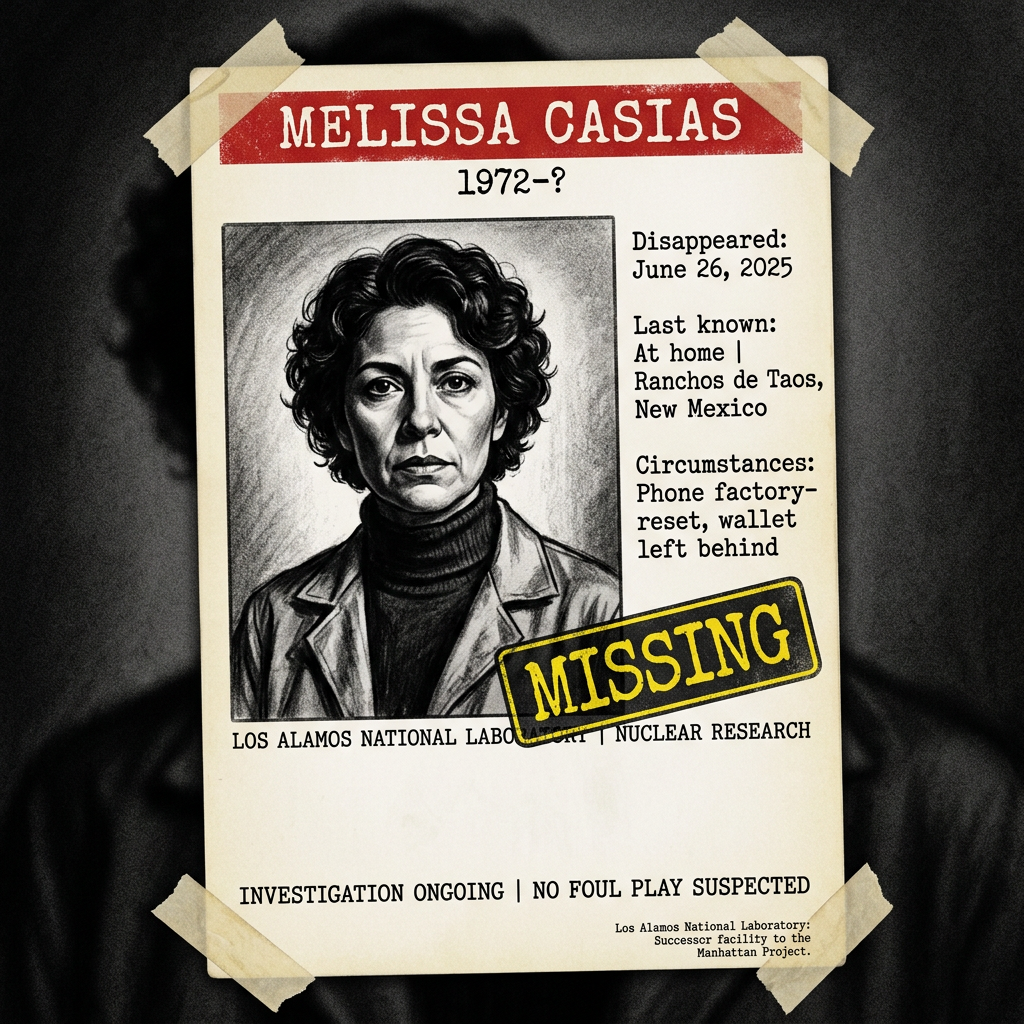
Melissa Casias — Los Alamos National Laboratory
- Disappeared: June 26, 2025
- Age: 53
- Specialty: Works at Los Alamos (Manhattan Project successor facility)
- Last known: Dropped husband at lab; returned home to work remotely; vanished; car present, phone factory-reset, purse and wallet left at home
- Official status: Missing; no suspected foul play; investigation ongoing
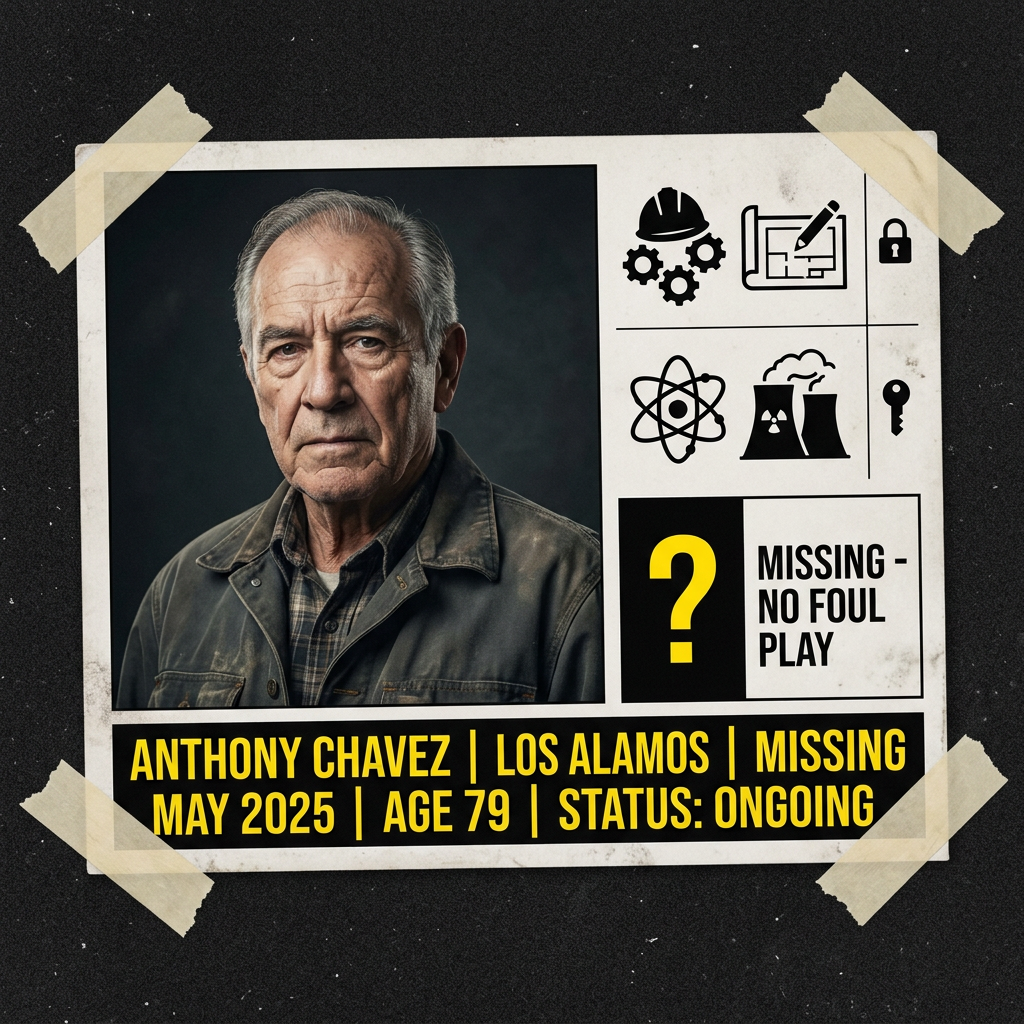
Anthony Chavez — Los Alamos National Laboratory
- Disappeared: May 2025
- Age: 79
- Specialty: Retired foreman supervising construction at Los Alamos
- Last known: Left home with handgun, no keys, no phone; car locked in driveway with personal items inside
- Official status: Missing; no indications of foul play; no signs of planning to leave
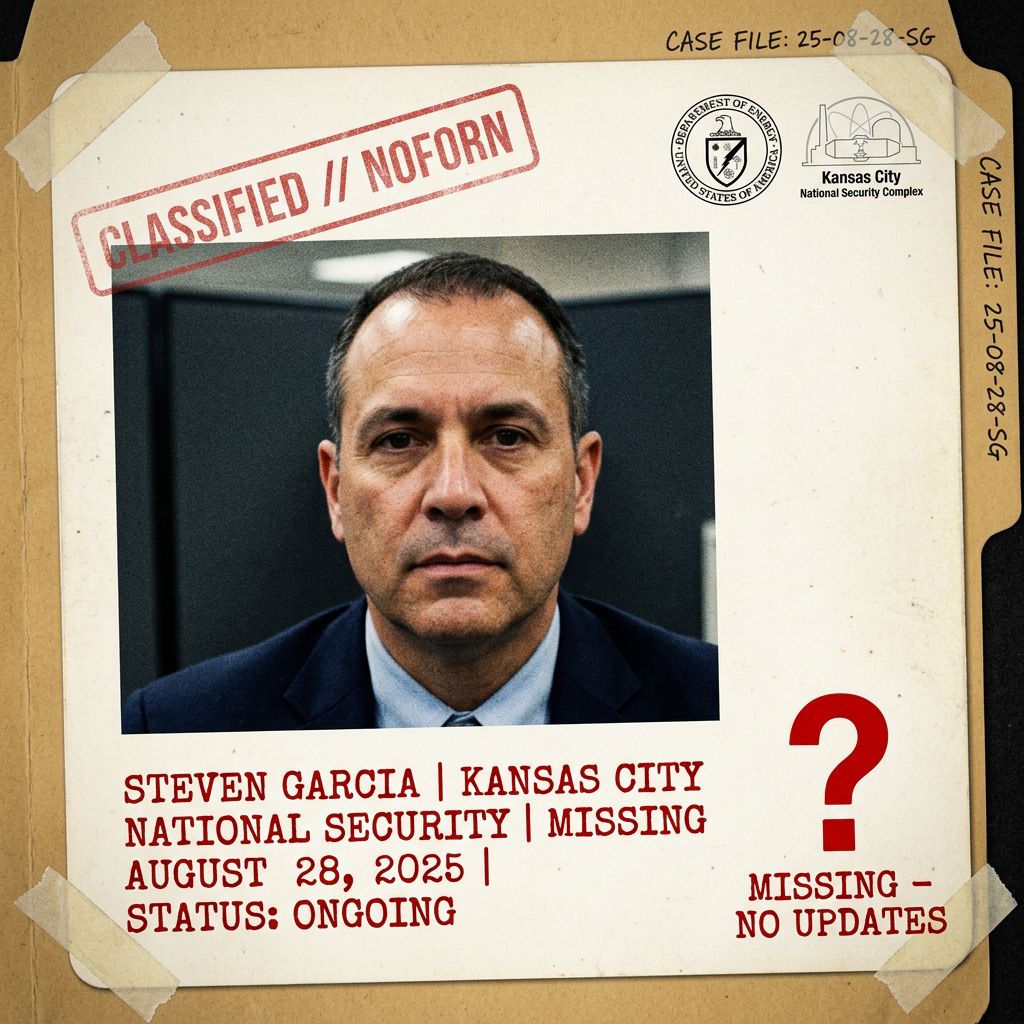
Steven Garcia — Kansas City National Security Campus
- Disappeared: August 28, 2025
- Age: [Not publicly disclosed]
- Specialty: Government contractor; work involved production of non-nuclear components for nuclear weapons
- Last known: Left home with handgun; no keys; no phone
- Connection: Worked at facility producing "national security products" for Department of Energy
- Official status: Missing; no new developments reported
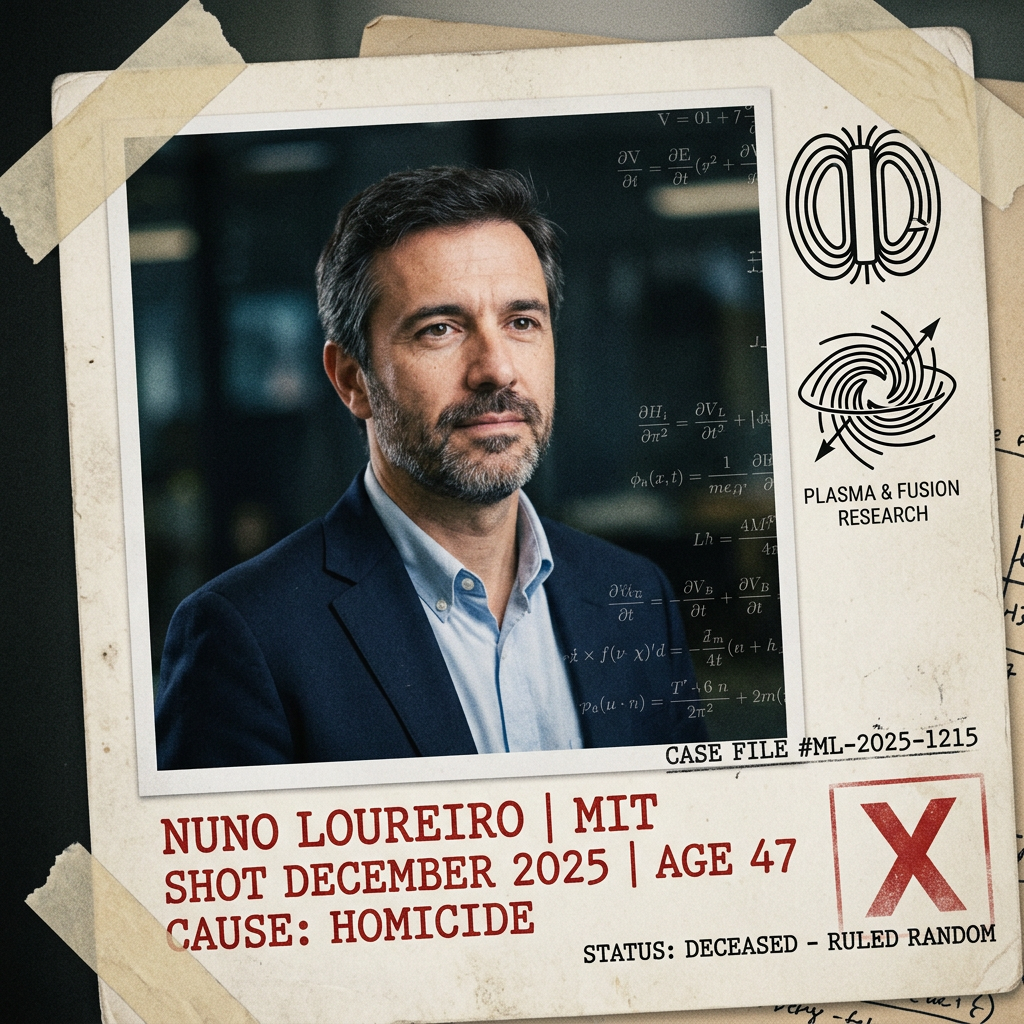
Nuno F.G. Loureiro — MIT Plasma Science and Fusion Center
- Died: December 2025
- Age: 47
- Specialty: Physicist; fusion scientist; led MIT's Plasma Science and Fusion Center
- Cause of death: Shot at his apartment in Brookline, Massachusetts
- Suspect: Claudio Manuel Neves Valente; also responsible for Brown University mass shooting two days prior
- Connection: Contacts at Department of Energy; police report cites colleague unsure if he had Top Secret clearance or defense work
- Official status: Homicide ruled not connected to his work; treated as random violence
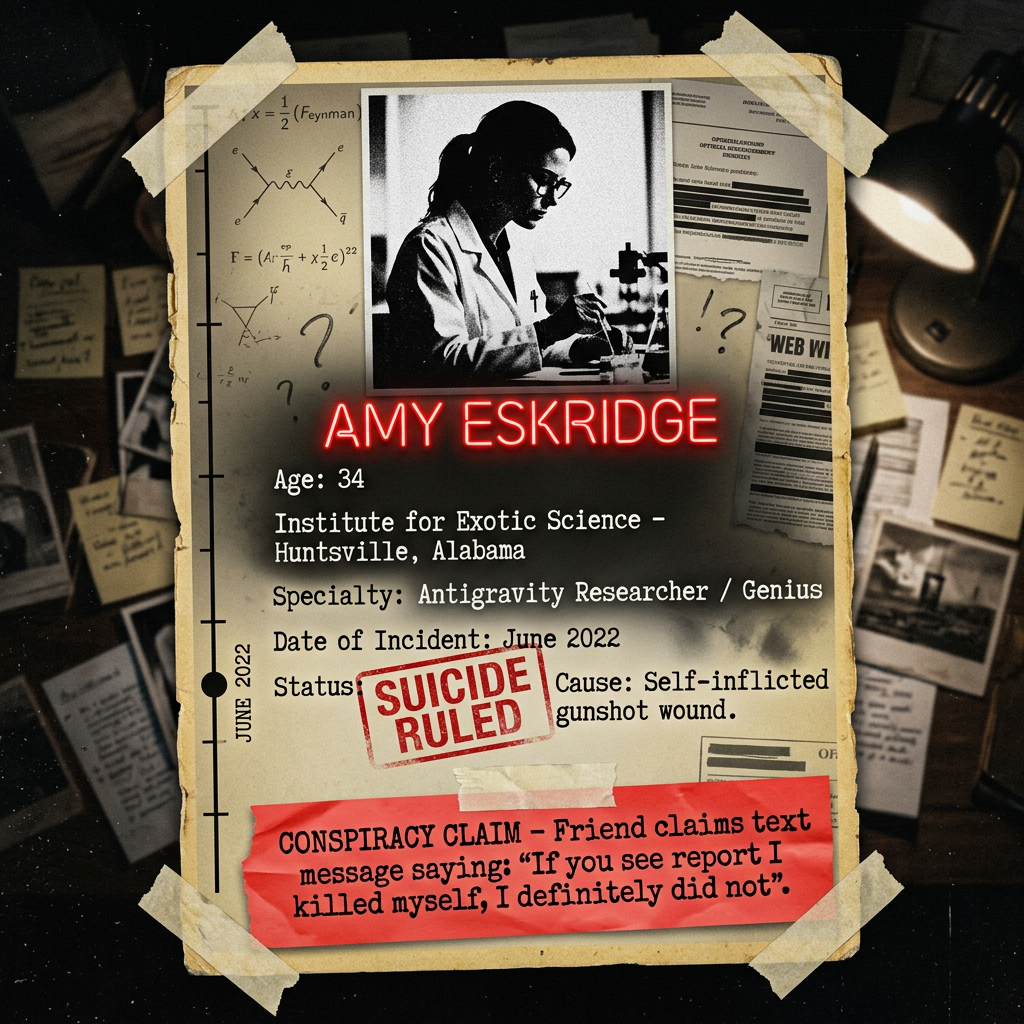
Amy Eskridge — Institute for Exotic Science, Huntsville, Alabama
- Died: June 2022
- Age: 34
- Specialty: "Genius" antigravity researcher; co-founded Institute for Exotic Science
- Cause of death: Ruled suicide by self-inflicted gunshot; coroner's determination
- Unusual element: Friend claims she texted him: "If you see any report that I killed myself, I most definitely did not"
- Official status: Suicide ruled; conspiracy theories dismissed; father says "scientists die, just like other people"
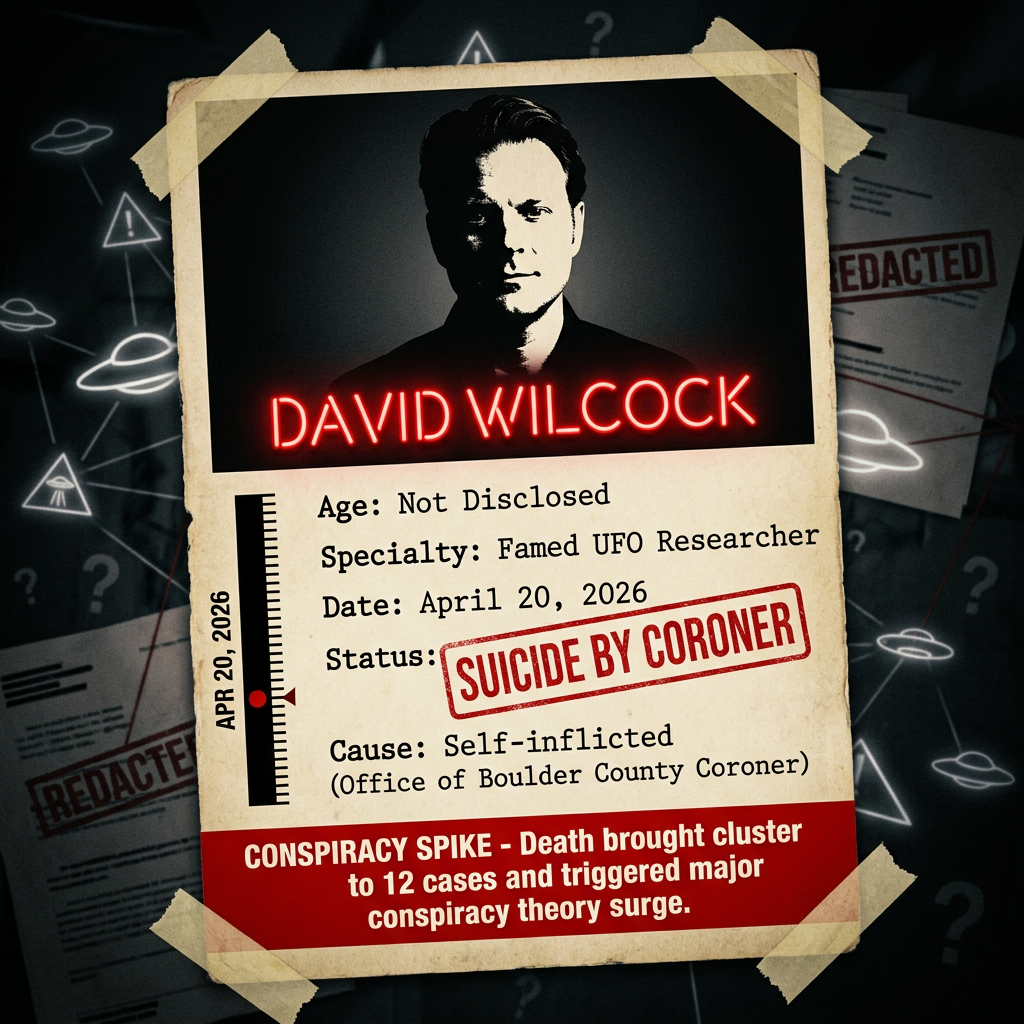
David Wilcock — UFO Researcher
- Died: April 20, 2026
- Age: [Not disclosed]
- Specialty: Famed UFO researcher
- Cause of death: Suicide by Office of Boulder County Coroner
- Connection: Not a scientist, but death brought cluster to 12 cases; death triggered major conspiracy theory spike
- Official status: Suicide confirmed; timing noted by conspiracy communities
The Weird Part: Why Institutional Silence Breeds Conspiracy
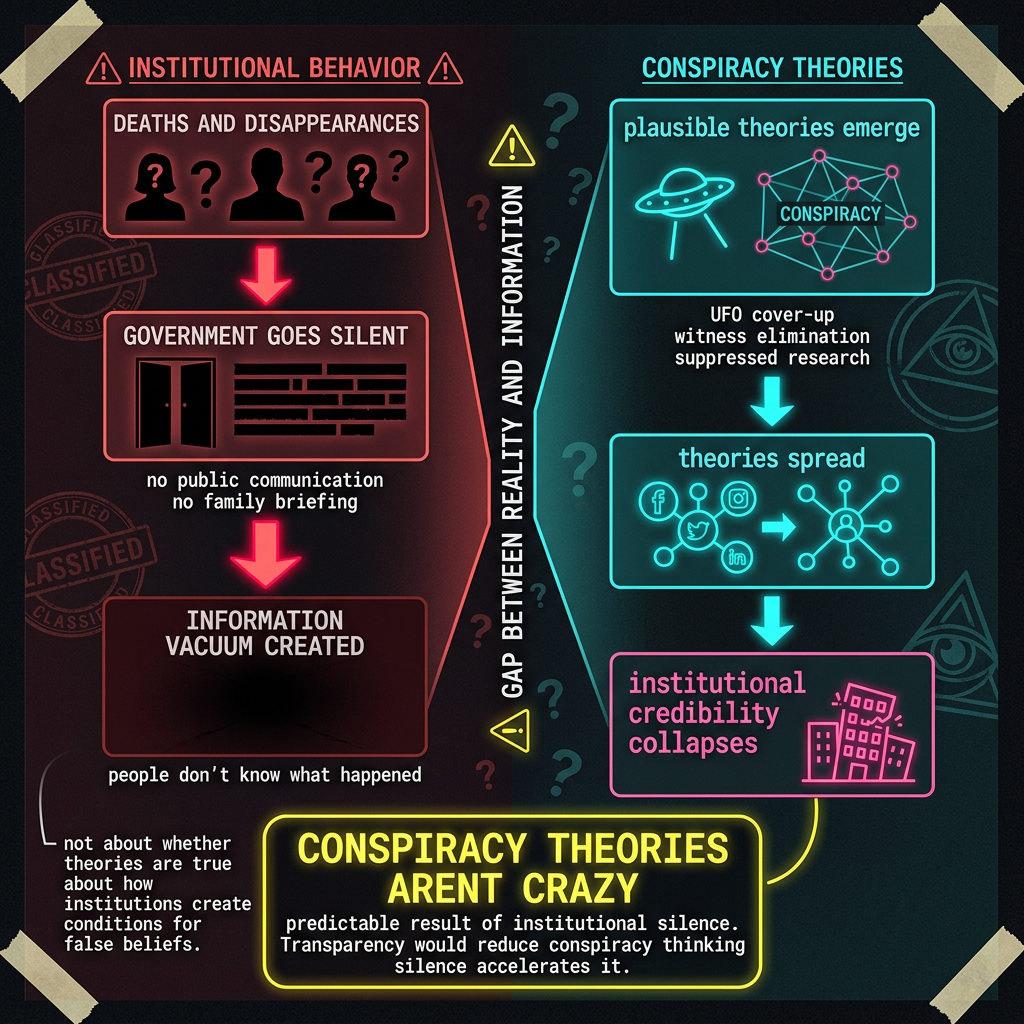
Here's the crucial thing: The conspiracy theories exist because institutions went silent.
Not because the scientists' deaths are necessarily connected (evidence for connection is thin).
Not because there's definitive proof of foul play (there isn't, in most cases).
Not because "they're all obviously murdered" (some appear to be natural causes, suicide, or unrelated incidents).
The conspiracy theories exist because:
- Official explanations are systematically opaque
When Michael Hicks died, no cause was disclosed. When Frank Maiwald died, barely any reporting. When Monica Reza disappeared, investigation details were sparse. When Carl Grillmair was shot, the case was labeled "random" and closed. When General McCasland vanished, the official line was "no foul play" with minimal investigation transparency.
Compare this to how government typically communicates about deaths in classified programs: even with security restrictions, there are usually some official statements, some investigation summaries, some acknowledgment that something happened.
Here? Silence. And silence is a data point. It signals: "We're not talking about this."
- The "no foul play" ruling is premature and vague
When Bernalillo County Sheriff's Office ruled "no foul play" in General McCasland's disappearance before a thorough investigation, it raised flags. How do you rule out foul play on a missing person with no body, no evidence, minimal search? The ruling itself became suspicious—not because it's necessarily wrong, but because it closed inquiry too quickly.
When investigators say "no indications of foul play" but won't elaborate, people fill the gaps with theories.
- The pattern itself is weird, regardless of connection
Is it a coincidence that 12 scientists connected to nuclear weapons, space technology, and classified research all died or disappeared within 3 years? Statistically, maybe. But the pattern is unusual enough that asking questions is rational. When institutions don't answer those questions, people assume the worst.
- Congress got involved, then went silent too
The House Oversight Committee launched an investigation. Committee members said it was a "national security threat." The FBI announced it was "spearheading the effort." And then: almost nothing. No public updates. No timeline. No briefings. No transparency.
When Congress investigates something and then doesn't talk about findings, people assume there's something to hide.
- The families are being left in the dark
Julia Hicks (Michael's daughter) told CNN: "Neither elected officials nor federal agencies had contacted her about her father's death as of Tuesday." She didn't understand why her father's death was lumped into a conspiracy cluster. She wanted answers from her government. She got silence.
When families are left uninformed and excluded from the process, they become more susceptible to alternative narratives. They're desperate for answers. If institutions won't provide them, someone else will.
The Boring Explanation (That's Secretly the Scary One)
Here's what's probably happening (and why it's worse than aliens):
Explanation 1: Some are unrelated
Carl Grillmair was likely killed by a random person (Freddy Snyder). Nuno Loureiro was likely killed by a mass shooter with personal grievances (Claudio Valente). Amy Eskridge likely died by suicide. These may have nothing to do with their work.
The issue: we don't know this because institutions won't clearly communicate it. Transparency would actually reduce conspiracy thinking.
Explanation 2: Some are probably medical
Michael Hicks had "known medical issues." General McCasland was 68 and walked into the desert with a handgun. Some deaths might be natural, some might be suicide, some might be medical emergencies. This is statistically likely.
The issue: we don't know because causes of death haven't been disclosed. When government won't say "natural causes," people imagine something worse.
Explanation 3: Some may involve security compartmentalization
Scientists working on classified projects sometimes die under unusual circumstances. Sometimes investigations are classified. Sometimes details can't be shared publicly for security reasons. This is real and legitimate.
The issue: when security classification becomes a black box, it's indistinguishable from cover-up. People can't tell the difference between "we can't talk about this for security" and "we don't want to talk about this because something bad happened."
Explanation 4: The most likely scary thing — institutional failure
What's probably actually happening:
- Multiple scientists connected to sensitive research died/disappeared
- Government agencies investigated some cases
- Results were classified or kept quiet for security/bureaucratic reasons
- Congress got briefed but didn't communicate findings publicly
- Families were left uninformed
- No coordinated public communication happened
- Into that vacuum, conspiracy theories rushed
This isn't necessarily a conspiracy. It's institutional dysfunction. It's poor crisis communication. It's security protocols that prevent transparency. It's bureaucratic inertia.
And it's worse than conspiracy because it's preventable.
If the FBI had said: "We've investigated 10 cases. 3 appear unrelated to any security concern. 4 are ongoing. 3 are classified but show no evidence of foul play connected to their work."
If families had been briefed.
If Congress had communicated findings.
If there had been any coordination to address public concern...
...conspiracy theories would have far less oxygen.
Instead: silence. And silence creates the conditions for exactly the theories we're seeing.
The Trust Gap
The deepest issue here isn't whether these deaths are connected. It's institutional trust.
When people don't trust their government, they're more vulnerable to alternative explanations. When scientists die and government goes quiet, people assume the worst. When Congress investigates and doesn't report back, people assume it's cover-up.
This is how conspiracy theories work:
They fill gaps left by institutional silence.
The missing scientists case illustrates this perfectly. The actual facts are: some deaths, some disappearances, mostly unresolved. The institutional response is: silence, opacity, minimal communication.
The result: conspiracy theories that are simultaneously unfounded and predictable.
Here's what's actually dangerous:
If government had been transparent from day one, we'd probably have much clearer picture. Some cases would be explained. Some would remain unsolved. Some would be classified. But we'd understand the landscape.
Instead, we have:
- Unexplained deaths
- Missing people
- Congressional investigations that go nowhere publicly
- No official communication
- Scientists and families left in the dark
Into that void: UFOs, cover-ups, witness elimination, suppressed research.
Not because these theories are true.
Because institutions made it impossible to know.
What This Reveals
This case file reveals something important about how conspiracy thinking actually works:
It's not that people are irrational.
It's that when institutions fail to communicate, rational people fill the gaps with plausible narratives. And the more sensitive the topic (national security, classified research, missing people), the more plausible the narratives become.
The government could reduce conspiracy thinking tomorrow by:
- Transparent public communication — what happened, what didn't, what remains classified and why
- Family engagement — briefing next of kin; giving them information
- Congressional accountability — if Congress investigates, report findings to public
- Timeline and process — if investigations are ongoing, say so; give update schedule
- Acknowledging the pattern — yes, it's unusual; here's what we've found
Instead: silence.
And silence is the most efficient conspiracy theory accelerant ever invented.
To Watch Next
- Congressional briefings with public summaries — will Oversight Committee release findings?
- FBI updates — Kash Patel said they'd "make appropriate arrests" if connections found; what does that timeline look like?
- Media investigation — which outlets will dig deeper into family accounts, local investigation details, institutional failures?
- Institutional reform — will agencies establish better communication protocols for high-profile cases?
- Trust metrics — as information (or lack thereof) emerges, how do public trust levels shift?
Sources
- U.S. House Committee on Oversight and Government Reform. "Comer & Burlison Seek Information on Missing Nuclear and Rocket Scientists." April 2026. https://oversight.house.gov/release/comer-burlison-seek-information-on-missing-nuclear-and-rocket-scientists/
- FBI. Official statement on missing scientists investigation. 2026.
- CNN. "At least 10 people tied to sensitive US research have died or disappeared in recent years, sparking federal investigation." https://www.cnn.com/2026/04/21/us/deaths-disappearances-scientists-investigation
- The Independent. "12 American scientists have gone missing or died. The mystery has become the talk—and worry—of Washington." https://www.independent.co.uk/news/world/americas/scientists-missing-dead-fbi-nuclear-space-ufo-b2965352.html
- New Mexico State Police Missing Persons Database. Melissa Casias and Anthony Chavez cases.
- FBI search for Retired Air Force General William Neil McCasland. Public records, 2026.
- Local news reporting from Bernalillo County, Taos County, Los Angeles County sheriff's offices on individual cases.